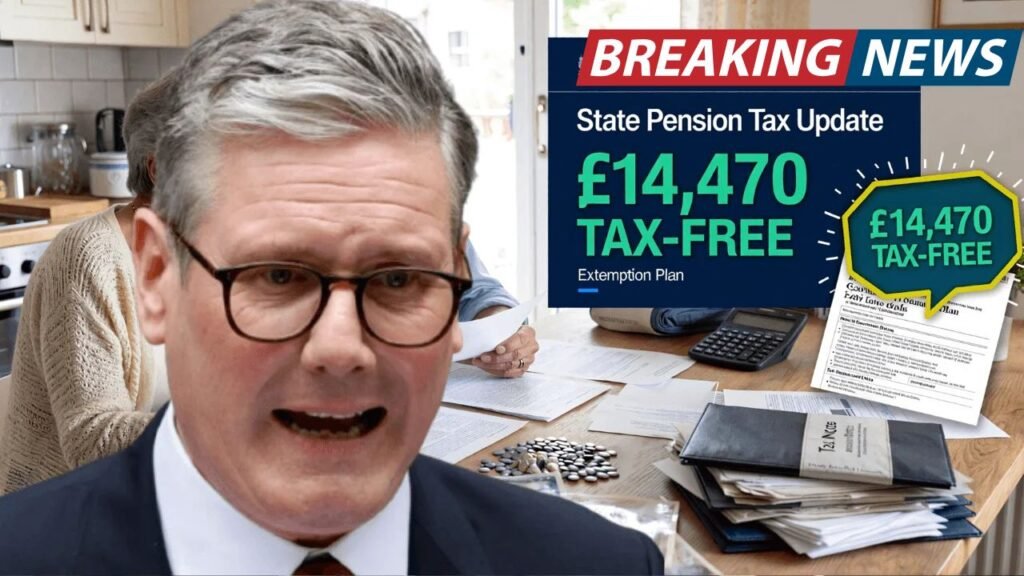
The UK Treasury has finally addressed the growing chatter regarding a proposed £14,470 tax exemption plan for retirees. For months, millions of pensioners have been worried about the “tax trap” created by frozen tax thresholds. As the State Pension rises each year under the Triple Lock, it gets closer and closer to the standard tax free Personal Allowance of £12,570. This new update from the Treasury clarifies where the government stands on raising that limit to protect older citizens from paying income tax on their basic state support.
The discussion centers on the idea of a specific “pensioner’s allowance” that would sit higher than the standard rate for workers. By setting a threshold at £14,470, the government would ensure that even those receiving the full new State Pension plus a small amount of extra savings would not be hit with a tax bill. The Treasury’s latest statement acknowledges the pressure on household budgets but also highlights the need to keep the country’s finances stable during a period of high inflation.
Why the £14,470 Figure Matters
The specific figure of £14,470 is not a random number. It has been calculated by campaigners to represent a “safety zone” for the next few years of pension increases. Without an increase in the tax free limit, nearly 900,000 more pensioners could find themselves filling out tax returns for the first time in 2026. The Treasury has noted that they are “closely monitoring” the gap between the full pension rate and the tax threshold to ensure the system remains fair for those on fixed incomes.
Impact on Your Monthly Income
For many, the fear is that a small raise in their pension will be immediately taken back by the taxman. If the exemption plan is adopted in the next budget, it would mean a significant sigh of relief for those who only have a small private pension or modest savings interest alongside their State Pension. The government has confirmed that for the 2026 tax year, they are looking at “targeted support” rather than a blanket change for everyone, though the £14,470 goal remains a key point of debate.
Understanding the Current Tax Landscape
To plan your finances effectively, it is important to know how the current rules compare to the proposed changes. While the Treasury has not yet fully committed to the £14,470 jump, they have provided a breakdown of how the current limits affect different groups.
| Feature | Current 2026 Rules | Proposed Exemption Plan |
| Personal Allowance | £12,570 | £14,470 |
| Full New State Pension | Approx. £12,000+ | Protected |
| Tax Rate Above Limit | 20% (Basic Rate) | 20% (Basic Rate) |
| Married Couple Transfer | £1,260 | Potential Increase |
| Status | In Effect | Under Review |
Key Steps for Pensioners in 2026
While the government continues to debate the exact numbers, there are things you can do right now to protect your money. Staying informed is the best way to make sure you do not pay a penny more than you have to.
- Check Your Tax Code: Ensure HMRC has your correct income details to avoid overpaying.
- Use Marriage Allowance: If your spouse earns less than the limit, they can transfer part of their allowance to you.
- Review ISA Savings: Remember that interest earned in an ISA is tax free and does not count toward your limit.
- Keep Records: Save your annual pension statement to prove your total income if asked.
- Monitor the Budget: Watch for the official Treasury announcements in the coming months for a final decision.
The Future of the Triple Lock
The Treasury also reaffirmed its commitment to the Triple Lock. This rule ensures the State Pension goes up by whichever is highest: 2.5%, inflation, or average wage growth. While this is great news for your bank balance, it makes the tax exemption plan even more urgent. If the pension keeps going up but the tax limit stays the same, more people will eventually cross the line. The “Huge Update” from the Treasury suggests that a middle ground may be reached where the threshold is adjusted just enough to keep the lowest earners out of the tax system.
FAQs
Will I have to pay tax on my pension this year?
If your total income from all sources stays below £12,570, you will generally not pay any income tax.
Did the Treasury approve the £14,470 limit yet?
They have acknowledged the plan and are reviewing it for future budgets, but it is not yet the official law for everyone.
Does the State Pension count as taxable income?
Yes. Even though tax is not usually taken out before you get the money, it is added to your other income to see if you owe tax.
What happens if I go over the limit by a small amount?
You only pay tax on the portion that is above the limit. For example, if you earn £12,670, you would only pay tax on £100.
Last updated: 11 Mar 2026 (UK Time)