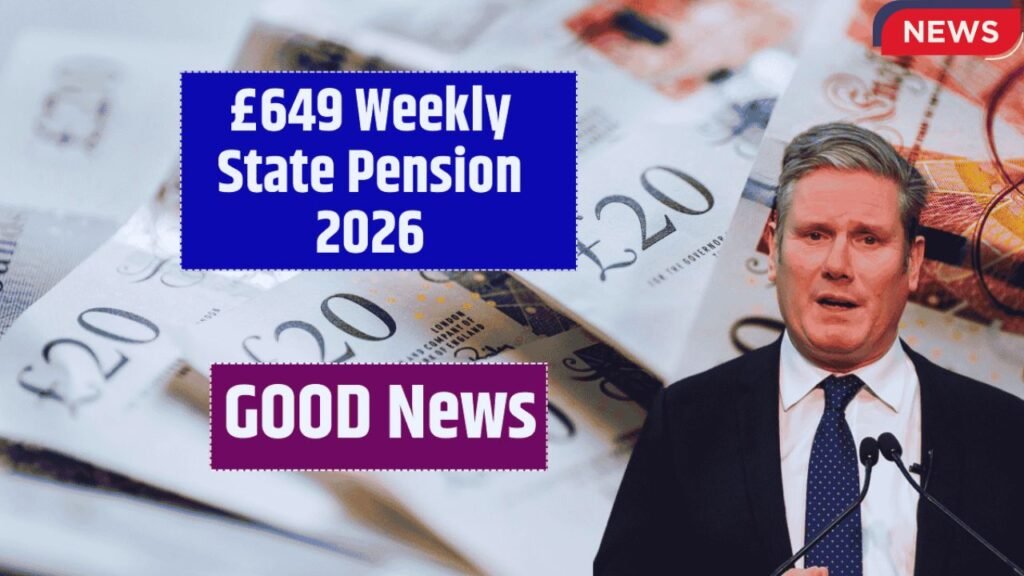
The UK government has confirmed a significant update for pensioners as we move into 2026. After much talk about how to help older people with the cost of living, new figures show that some households could see their weekly support reach as much as £649. This is part of a plan to make sure those who have retired are not left behind by rising prices. While not every single person will get this exact high amount, the boost is designed to help the most vulnerable pensioners who rely on the state for their full income.
How the £649 figure is reached
It is very important to understand that the £649 weekly amount is a combined figure. It is not the basic pension alone, but rather a total package of support for a couple who both qualify for the full state pension and additional help like Pension Credit. For a single person, the standard New State Pension is rising to around £241.30 per week from April 2026. However, when you add in top-ups for housing, heating, and low income credits, the weekly total for a household can hit that £649 mark.
The Triple Lock promise stays in place
The main reason for the 2026 increase is the Triple Lock rule. This is a special promise that says the state pension must go up every year by whichever is highest: earnings growth, inflation, or 2.5 percent. This year, wage growth was the winner, leading to a 4.8 percent boost for everyone on the state pension. This means a standard retiree will see their yearly income go up by hundreds of pounds, helping to pay for essentials like bread, milk, and electricity.
- The New State Pension rises to roughly £241.30 per week
- The Old Basic State Pension rises to roughly £184.90 per week
- Pension Credit is increased to top up those on the lowest incomes
- Most increases will start showing up in bank accounts from 6 April 2026
Who qualifies for the maximum support?
To get the highest levels of support that lead toward the £649 household total, there are certain rules you must follow. Usually, you need to have 35 years of National Insurance contributions to get the full new pension. If you have fewer years, your payment might be lower. However, if your total income is very small, the DWP will use Pension Credit to bring you up to a higher weekly level. This ensures that no retiree is forced to live below a certain basic standard of living.
| Pension Type | Current Weekly Rate | New 2026 Weekly Rate |
| Full New State Pension | £230.25 | £241.30 |
| Old Basic State Pension | £176.45 | £184.90 |
| Pension Credit (Couple) | £332.95 | £348.90 |
| Combined Household Max | Variable | Up to £649 |
When will the extra money arrive?
The new rates for 2026 are linked to the start of the new tax year. Most people will see their first increased payment in the middle of April. Because pensions are usually paid every four weeks, it might take a month before you see the full new amount in your account. You do not need to call the DWP or fill out any forms to get this rise. It happens automatically based on the records the government already has for you.
Watch out for pension scams
Whenever the government announces a big money boost, scammers try to take advantage. You might get a text or a phone call from someone pretending to be from the DWP or HMRC. They might say you need to “apply” for your £649 boost or give your bank details to “verify” your claim. This is a lie. The government will never ask for your private bank details over a text. If you are already getting your pension, the increase will just happen on its own.
FAQs
Is £649 the new amount for every pensioner?
No, this is a combined household total for couples or those getting extra support like Pension Credit. A single person gets a smaller base amount.
Do I have to do anything to get the 4.8 percent increase?
No. The DWP will update your payments automatically starting in April 2026.
Will this pay rise be taxed?
If your total income for the year goes over the personal tax free limit, you may have to pay a small amount of tax on your pension.
What if I reached pension age before 2016?
You will still get a 4.8 percent boost, but it will be added to your “old” basic state pension rate instead of the new rate.
Last updated: 11 Mar 2026 (UK Time)