If you’ve seen headlines about a new UK minimum wage kicking in during April 2026, many workers are checking their pay slips to see how much extra they’ll get. The government confirmed these increases back in late 2025 after accepting the Low Pay Commission’s recommendations in full. This isn’t a surprise last-minute change—it’s the annual uplift that happens every April, with the biggest focus on the National Living Wage (NLW) for those aged 21 and over.
The rates rise to help low-paid workers keep pace with earnings growth and living costs, affecting millions across the country. Employers must update pay from April 1, 2026, or face penalties. Here’s the straightforward breakdown of the new rates and what they mean for you.
The New Rates from April 1, 2026
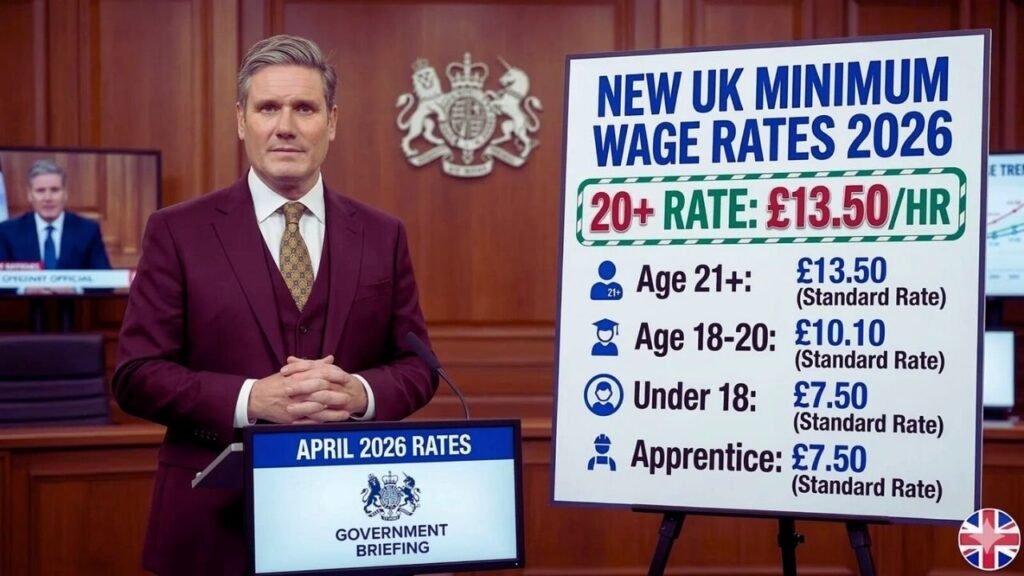
The increases vary by age group, with the NLW (often called the main minimum wage) seeing a solid but moderate bump.
- National Living Wage (aged 21 and over): £12.71 per hour (up 50p or 4.1% from £12.21).
- National Minimum Wage (aged 18 to 20): £10.85 per hour (up 85p or 8.5% from £10.00).
- National Minimum Wage (aged 16 to 17 and apprentices): £8.00 per hour (up 45p or 6.0% from £7.55).
These apply to most workers, including full-time, part-time, agency, and zero-hours staff. The accommodation offset (for live-in workers) also rises to £11.10 per day.
How Much Extra Could You Get?
The pay boost depends on your hours and current rate.
- A full-time worker (37.5 hours/week) aged 21+ on the old NLW gets about £18.75 more per week or roughly £975 extra yearly before tax.
- Younger workers see bigger percentage jumps—18-20 year olds gain more per hour proportionally.
- If you’re already paid above these rates, your employer isn’t forced to match the increase, but many do to stay competitive.
The government estimates around 2.7 million people benefit directly, with the NLW staying one of Europe’s highest.
Who Needs to Check Their Pay Right Now?
Most workers won’t see changes until their April payslip, but it’s smart to prepare.
- If you’re on or near the minimum rates, confirm your employer knows about the update—payroll teams often adjust automatically.
- Apprentices and younger staff get the same £8.00 rate regardless of role (unless higher NMW applies).
- Self-employed or gig workers aren’t covered by NMW, but many platforms align pay to meet or beat these levels.
No action is needed for most—just expect the higher rate from April 1 if you’re eligible.
Other Related Changes Around the Same Time
A few linked statutory payments rise slightly later.
- Statutory Sick Pay, maternity pay, and similar increase from April 6, 2026 (e.g., SSP to £123.25 weekly).
- These help if you’re off work or on family leave.
The real Living Wage (voluntary higher rate) is separate—around £13.45 outside London for 2025-26—but the statutory minimum is what employers must legally pay.
What Should Workers and Employers Do?
Stay ahead to avoid surprises.
- Workers: Check your contract or payslip for your current hourly rate. Use GOV.UK’s minimum wage calculator if unsure.
- Employers: Update payroll systems by April 1—fines for underpayment can reach thousands per worker.
- If you think you’re underpaid now or after April, contact HMRC anonymously via their helpline or online form.
The rules are clear-cut and enforced strictly.
The new UK minimum wage rates for April 2026 deliver a welcome pay rise for low earners, with the National Living Wage hitting £12.71 per hour for those 21 and over, plus bigger percentage boosts for younger workers and apprentices. Announced after the Low Pay Commission’s advice and accepted fully by the government, these changes take effect automatically for eligible staff from April 1. Millions stand to gain hundreds or thousands extra yearly, helping with rising costs. Check your current rate against the new ones on GOV.UK today, and make sure your employer is ready. It’s a straightforward uplift that keeps the UK’s minimum wage strong—stay informed and enjoy the boost when it lands.
Last updated: 16 Mar 2026 (UK Time)