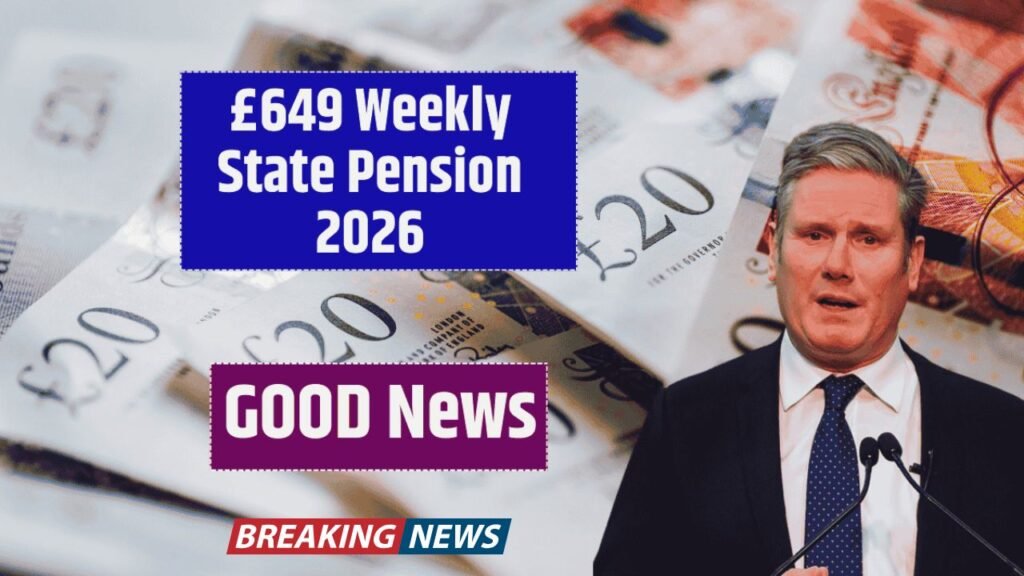
The UK government has shared a major update that will bring a big smile to the faces of many older people across the country. As we enter 2026, new figures have been confirmed for the state pension that could see some households receiving as much as £649 every single week. This move is part of a plan to help pensioners keep up with the rising prices of food and energy. While not every person gets the same amount, the goal is to make sure that those who have worked hard all their lives have enough money to live comfortably in their later years.
How the £649 figure is reached
It is very important to understand that the £649 figure is a combined total for a household. It is not what one single person gets on their own. Instead, it represents the total weekly money for a couple where both people qualify for the full new state pension plus extra top ups. For a single person, the full new state pension is rising to around £241.30 per week from April 2026. When you add in things like Pension Credit for those on low incomes, the weekly budget for a home can reach that higher £649 mark.
The Triple Lock promise stays strong
The reason for this big boost is a rule called the Triple Lock. This is a promise from the government to increase the state pension every year. They look at three things: how much prices have gone up, how much wages have grown, or 2.5 percent. They always pick the highest one. This year, wages went up by 4.8 percent, so the pension is going up by the same amount. This ensures that your pension does not lose its value when things in the shops get more expensive.
Who can get this money?
To get the full new state pension, you usually need to have 35 years of National Insurance contributions. If you have at least 10 years but less than 35, you will still get some money but it will be a smaller amount. The DWP has also made it clear that they want more people to claim Pension Credit. This is a special top up for people who have a very small income. If you qualify for this, you might also get help with your council tax and a free TV license if you are over 75.
- Men born on or after 6 April 1951
- Women born on or after 6 April 1953
- People with at least 10 years of National Insurance records
- Couples who both reach the state pension age
- Individuals on low incomes who qualify for Pension Credit
When will the payments arrive?
The new rates for 2026 will officially start in April. Most people will see the extra money in their bank accounts from 6 April 2026. Because the pension is usually paid every four weeks, your first full payment at the new rate might land a little later in the month. You do not need to do anything to get this increase. The DWP will update your payments automatically and you should receive a letter in the post telling you exactly how much your new weekly amount will be.
| Pension Type | Current Weekly Rate | New 2026 Weekly Rate |
| Full New State Pension | £230.25 | £241.30 |
| Old Basic State Pension | £176.45 | £184.90 |
| Pension Credit (Couple) | £332.95 | £348.90 |
| Combined Household Max | Variable | Up to £649 |
Rules for the older pension system
If you reached the state pension age before April 2016, you are on the “old” system. You will still get the 4.8 percent increase, but your basic rate starts at a lower point. However, many people on the old system also get an extra payment called the Additional State Pension. When you add all these parts together, you might find that your total weekly pay is very similar to those on the new system. It is always worth checking your latest statement to see exactly what you are entitled to.
FAQs
Do I need to apply for the £649 boost?
No, the increase is applied automatically to your pension. If you think you should be getting Pension Credit to reach a higher amount, you do need to apply for that separately.
What if I do not have 35 years of work?
You will get a portion of the pension. For example, if you have 20 years, you will get about 20 parts out of 35 of the full amount.
Is the state pension taxed?
Yes, if your total income from all your pensions goes over the tax free limit, you may have to pay a bit of income tax.
Can I get this if I live abroad?
You will get the increase if you live in the UK, the EEA, or certain other countries that have a deal with the UK.
Last updated: 11 Mar 2026 (UK Time)