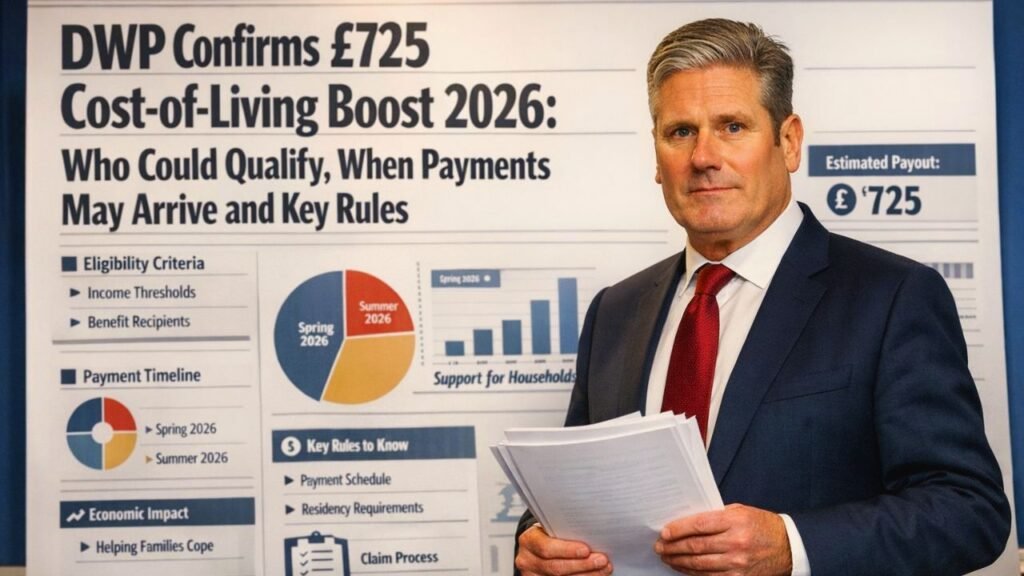
The Department for Work and Pensions (DWP) has shared new details about a financial lift for millions of people across the UK. As we move through 2026, many households are still feeling the pinch from high food prices and energy bills. To help out, a boost worth up to £725 is being rolled out to support those on low incomes and pensioners. This is not just a one off gift but a part of a bigger plan to make sure benefits keep up with the real cost of buying essentials.
What is the £725 boost exactly?
It is important to understand that this £725 figure is part of a permanent change to how benefits like Universal Credit are paid. Instead of a single cheque arriving in the post, the DWP is increasing the standard allowance by more than the usual inflation rate. By the time we reach the end of this rollout, a single person over 25 could be seeing their yearly income improve by this total amount. This plan aims to give families a steady safety net rather than a temporary fix that disappears after a few weeks.
Who is eligible for the 2026 support?
The main group of people who will see this extra money are those claiming Universal Credit. However, the DWP has made it clear that other vulnerable groups are included in the wider support package for 2026. If you are working but your wages are low, you can still qualify as long as your claim is active. Pensioners are also a big priority this year, with the State Pension seeing a healthy rise to help cover the cost of heating and eating.
- People on Universal Credit (both single and couples)
- Pensioners receiving the State Pension or Pension Credit
- Individuals on disability benefits like PIP or DLA
- Families with more than two children (due to new rule changes)
- Those on legacy benefits like Income Support or ESA
When will the payments arrive?
The timing of this boost is tied to the new financial year which starts in April 2026. Most people will see their monthly payments go up from this date. For those on Universal Credit, the increase happens automatically in your usual assessment period. Because of the Easter bank holidays in April, some people might even see their money land a few days early to make sure they have cash for the long weekend.
| Group | Estimated Annual Boost | Start Date |
| Single Person (Over 25) | Up to £725 (Cumulative) | April 2026 |
| Joint Claimants (Over 25) | Variable Uplift | April 2026 |
| New State Pensioners | Approx £520 increase | April 2026 |
| Families with 3+ Kids | Extra Child Element | April 2026 |
Key rules and changes to watch for
There are a few big changes happening at the same time that you should know about. One of the biggest is the removal of the two child limit. This means families with three or more children can now get extra support for every child in the house. However, there is a bit of a trade off for some new health claimants. While the basic pay is going up for everyone, some new disability claims might start at a lower rate than they used to, so it is vital to check your specific letters from the DWP.
How to get your boost
The best part about this 2026 boost is that you do not need to apply for it. The DWP will calculate the new rates and add them to your regular payments. If you are already getting benefits, the money will just show up in your bank account like normal. Be very careful if you get a text or email asking you to click a link to claim your £725. These are almost always scams. The government will never ask for your bank details over a text message.
FAQs
Do I need to fill out a form for the £725 boost?
No, the increase is applied automatically by the DWP to your existing benefit claim.
Will this affect my other benefits like PIP?
No, this boost is focused on the standard allowance of Universal Credit and will not reduce your disability payments.
What if I am a pensioner?
Pensioners will see their boost through the 4.8% increase in the State Pension which starts in April 2026.
Is it a single lump sum payment?
For most, it is a permanent increase to your monthly or weekly pay rather than one single payment.
Would you like me to help you calculate how much your specific Universal Credit payment might change from April?
Last updated: 11 Mar 2026 (UK Time)