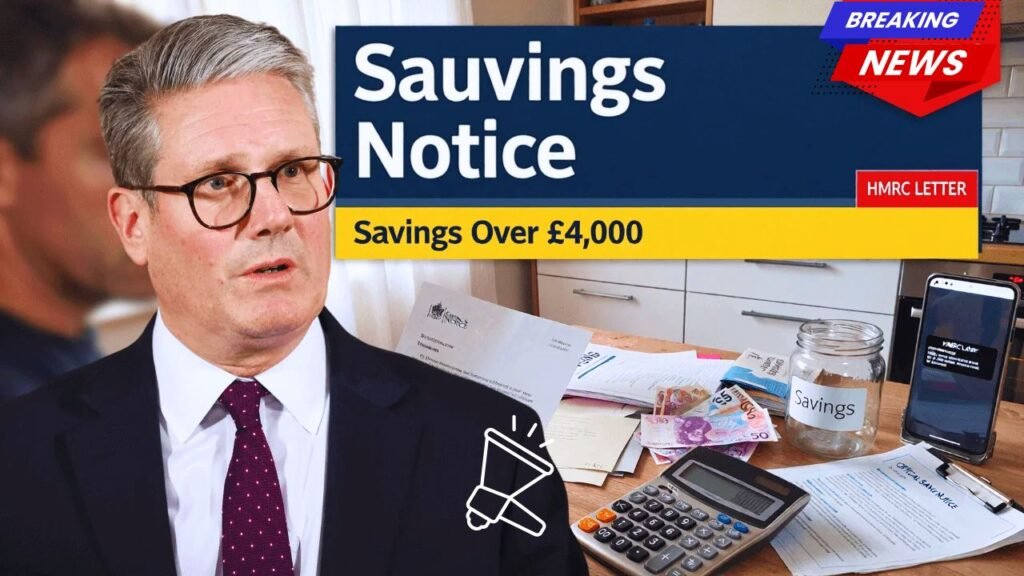
Thousands of people across the UK are opening their mail this week to find a surprising letter from HM Revenue and Customs (HMRC). These notices are being sent to individuals who have more than £4,000 sitting in standard savings accounts. While getting a letter from the tax office can feel a bit scary, experts say this is part of a new push to make sure everyone is paying the right amount of tax on the interest their money earns.
For a long time, interest rates were so low that most people did not have to worry about tax on their savings. However, because rates have stayed high recently, even a modest amount of money in the bank can now earn enough interest to cross the tax free limits. HMRC is using new digital tools to look at bank data and check if people owe money. This is why so many “nudge letters” are arriving on doorsteps this month.
Why the £4,000 Mark Matters
The figure of £4,000 is not a new legal limit, but it has become a major trigger for HMRC’s systems. If you have this much in a high street savings account, you might be earning more interest than your Personal Savings Allowance allows. For most people who pay the basic rate of tax, you can earn £1,000 in interest each year without paying a penny. But if you are a higher rate taxpayer, that limit drops to just £500.
HMRC is sending these letters to ask people to double check their records. If the bank has reported that you earned a lot of interest, HMRC might change your tax code. This means they will take the tax you owe directly out of your monthly pay or your pension. The letters are meant to give you a heads up before this happens so you are not caught out by a smaller paycheck later in the year.
The Impact on Pensioners and Low Earners
Pensioners are being hit particularly hard by these new checks. Many retirees have a few thousand pounds saved for emergencies or a “rainy day.” Because the State Pension has gone up recently due to the triple lock, some people are findng that their total income is now just above the personal tax threshold. When you add a bit of savings interest on top, it can suddenly push you into a position where you have to pay tax for the first time in years.
There is a special rule called the Starting Rate for Savings that can help those on a very low income. If your total income from work or a pension is less than £17,570, you might be able to earn up to £5,000 in interest tax free. However, if your pension goes up, this special buffer shrinks. This is making the math very confusing for many elderly people who are now receiving these HMRC letters asking for clarification.
| Taxpayer Type | Tax Free Interest Limit (PSA) | Common Savings Trigger |
| Basic Rate (20%) | £1,000 per year | £20,000 at 5% interest |
| Higher Rate (40%) | £500 per year | £10,000 at 5% interest |
| Additional Rate (45%) | £0 (No allowance) | Any amount of interest |
| Low Income Earners | Up to £5,000 (Starting Rate) | Varies by total income |
How to Protect Your Savings from Tax
The good news is that there are simple ways to stop these letters from arriving in the future. The best tool for most people is an ISA (Individual Savings Account). Any money you put into a Cash ISA can earn as much interest as you like, and HMRC will never ask for a penny of tax on it. You can put up to £20,000 into an ISA every single tax year.
- Move your money into a Cash ISA to keep all your interest tax free.
- If you are married, you can move savings into the name of the partner who earns less.
- Check your Personal Tax Account online to see what interest HMRC thinks you have earned.
- Do not ignore the letter as it could lead to fines or interest charges on unpaid tax.
- Keep your bank statements handy to prove how much interest you actually received.
FAQs
Is this letter a scam?
Scammers often send fake HMRC messages. A real letter will usually come in a brown envelope and will never ask you to pay via a link or with gift cards. If in doubt, call the official HMRC helpline.
Why did I get this if I have less than £1,000 in interest?
HMRC might be checking your records to ensure your total income, including your pension and savings, is still below the tax threshold.
Can I appeal the tax bill?
Yes. If HMRC has the wrong figures or thinks a joint account belongs only to you, you can contact them to correct the mistake.
Will this affect my benefits?
For most people, paying a small amount of tax on interest does not change your benefits, but having large amounts of savings over £6,000 or £16,000 can affect things like Universal Credit.
Last updated: 11 Mar 2026 (UK Time)