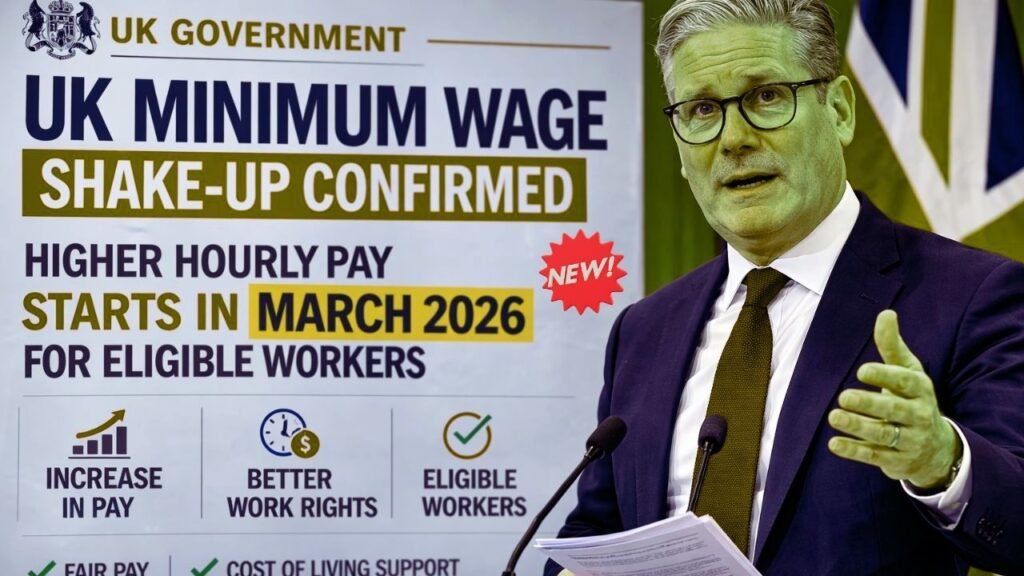
Millions of workers across the UK will soon see a welcome boost to their pay packets as the government confirms a rise in the minimum wage. Starting in March 2026, hourly rates will increase for various age groups, aiming to help low earners keep up with rising living costs. This change, announced late last year, promises an extra few pounds each week for those on the lowest incomes. For a full time worker aged over 21, that could mean nearly a thousand pounds more over the year. Officials say it is a step towards fairer pay, but some business groups worry about added pressures on small firms.
What the New Rates Look Like
The updates cover the National Living Wage for those over 21 and the National Minimum Wage for younger staff. The over 21 rate jumps from 12 pounds 21 pence to 12 pounds 71 pence per hour, a solid 4.1 percent lift. Younger workers aged 18 to 20 get a bigger percentage bump, up 8.5 percent to 10 pounds 85 pence. Those under 18 or in apprenticeships see their pay rise to 8 pounds an hour from 7 pounds 55 pence.
To make it clear, here is a simple table showing the old and new rates:
| Age Group | Old Rate (per hour) | New Rate (per hour) | Increase |
|---|---|---|---|
| 21 and over (National Living Wage) | £12.21 | £12.71 | 50p |
| 18 to 20 | £10.00 | £10.85 | 85p |
| Under 18 and apprentices | £7.55 | £8.00 | 45p |
These figures apply from March 1, 2026, and employers must comply or face fines.
Who Stands to Gain the Most
This shake up will touch the lives of about 2.4 million people, many in retail, hospitality, and care sectors. Full time staff on the top rate could pocket around 900 pounds extra annually, based on a standard 37.5 hour week. Part timers and those just scraping by will feel the difference too, perhaps affording a bit more at the shops or saving for a rainy day. Campaigners from groups like the Living Wage Foundation cheer the move, calling it vital amid food and energy price hikes. Yet they push for even faster rises to match true living costs.
Business Views and Challenges Ahead
Not everyone is popping champagne. Small business owners, through the Federation of Small Businesses, flag concerns over squeezed margins. They say higher wages mean tougher choices, like cutting hours or raising prices for customers. Larger chains might absorb the hit easier, but pubs and cafes could struggle. The government promises support through tax breaks and training funds to ease the shift. Still, experts predict a few thousand jobs at risk if firms pass on costs to staff rosters.
How It Fits the Bigger Picture
This rise builds on last year’s increases and ties into Labour’s pledge for a “real living wage.” It aims to keep minimum pay at two thirds of average earnings, a benchmark set by the Low Pay Commission. Inflation has cooled a bit, but bills remain steep for many families. The change also nods to youth opportunities, with the sharper lift for 18 to 20 year olds meant to draw more into work. Overall, it signals a government keen on worker rights, though debates rage on balancing growth and fairness.
Quick Impacts at a Glance
Here are some key ways the wage boost could play out:
- Extra cash for basics like groceries or bus fares, easing weekly budgets.
- Boost to high street spending, as low earners put money back into local economies.
- Pressure on employers to review all pay scales, potentially lifting middle earners too.
- Steps towards closing the gender pay gap, since more women work in low wage roles.
Looking Forward: What Next?
As March nears, workers should check payslips and chat with bosses about updates. Unions urge vigilance to ensure everyone gets what is due. Future years might see bolder steps if economic winds stay fair. For now, this confirmed rise offers real relief in tough times.
FAQs
When does the new minimum wage start?
It kicks in on March 1, 2026, for all eligible UK workers.
Does it apply to everyone?
No, it covers most but not self employed folks or those on certain benefits. Check with Acas for details.
How much extra will I get?
Depends on hours and age. A 21 plus worker on full time could see about 900 pounds a year more.
What if my boss does not pay up?
Report to HMRC, who can fine employers up to 20,000 pounds per worker.
Will prices go up because of this?
Some say yes, especially in shops and eateries, but others think the spending lift helps balance it.
Last updated: 11 Mar 2026 (UK Time)