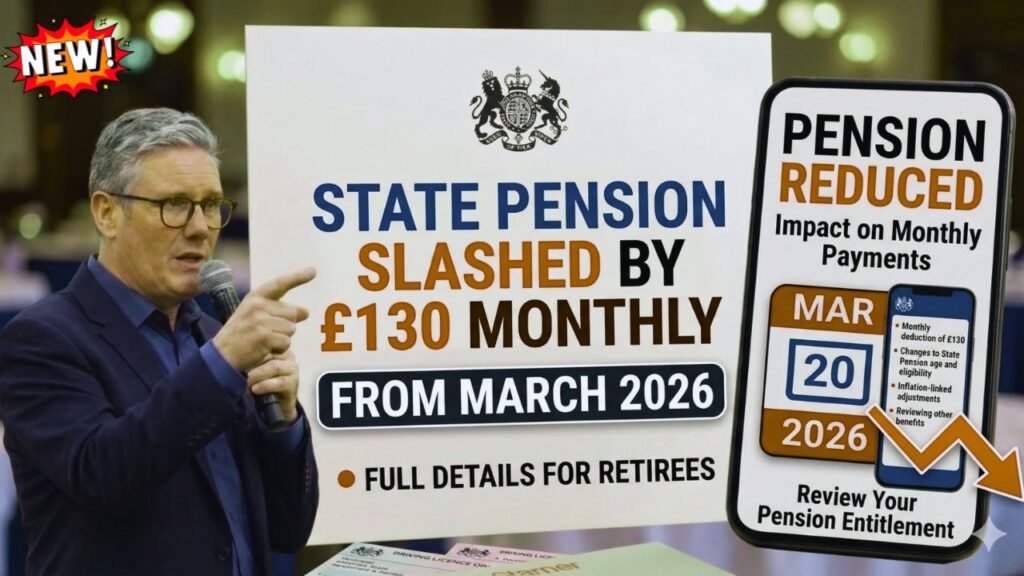
There has been a lot of confusion lately regarding the UK State Pension and claims that payments are being slashed by £130 a month. It is very important to clear this up: the State Pension is not being cut. In fact, for the new tax year starting in April 2026, the State Pension is actually set to increase. The government remains committed to the “triple lock” guarantee, which ensures that pensions rise by the highest of either average earnings growth, inflation, or 2.5 percent.
Why You Might Be Hearing About a Drop
The rumors about a £130 monthly drop are likely based on a misunderstanding of how pension payments work or confusion with other benefit changes. While the headline rates for the State Pension are going up, individual payments can sometimes seem lower due to administrative reasons, such as moving from an older pension system to a newer one, or changes in tax codes. If you have seen a change in your bank account, it is much more likely to be a temporary adjustment or an issue with your specific National Insurance record rather than a national policy to cut pension rates.
The Actual 2026 Pension Increases
Far from a reduction, retirees will see an increase in their weekly payments starting in April 2026. Because average wage growth was the highest factor in the triple lock calculation this year, both the basic and the new State Pension will rise by 4.8 percent. This increase helps to ensure that your pension keeps pace with the cost of living.
Understanding Your New Rates
To help you see the difference, here is a simple breakdown of how the weekly rates are changing from the 2025 to 2026 tax year to the 2026 to 2027 tax year.
| Pension Type | Weekly Rate (2025 to 2026) | Weekly Rate (2026 to 2027) |
| New State Pension | £230.25 | £241.30 |
| Basic State Pension | £176.45 | £184.90 |
How to Check Your Own Payments
If you are worried about your specific pension amount, the best thing to do is use the official government website. You can log in to your account to view your personal State Pension forecast. This will show you exactly how many years of National Insurance contributions you have and what your estimated weekly payment will be. If you notice that your payment is lower than expected, it might be due to gaps in your National Insurance history, which you can often top up with voluntary contributions.
Important Things to Remember
It is easy to get worried when you read scary headlines about money. However, the government has officially confirmed the new rates for the coming year. Remember these key points:
- The State Pension is rising by 4.8 percent this April.
- Always check your official statements from the Department for Work and Pensions (DWP) rather than relying on social media rumors.
- You can call the Pension Service if you believe your payment calculation is wrong.
- The triple lock is still in place to protect your pension value.
Final Advice for Retirees
Take a moment to check your personal records on the GOV.UK website. It is the most reliable way to know what you are entitled to. If you are ever unsure about your income or if you think you are missing out on Pension Credit, which is a separate benefit for those on lower incomes, you can contact the DWP helpline. Do not let rumors cause you stress; take charge of your finances by checking the facts directly from the source.
Frequently Asked Questions
Is my State Pension being cut by £130 a month?
No. This is incorrect. The State Pension is increasing in April 2026, not decreasing.
Why does my pension payment change sometimes?
Payments can change due to tax code updates, changes in your National Insurance record, or if you are transitioning between different pension systems.
What is the triple lock?
It is a government promise that the State Pension will rise by the highest of three figures: wage growth, inflation, or 2.5 percent.
How can I see my exact pension amount?
You can log in to the official GOV.UK website to view your personalized State Pension forecast and check your payment history.
Last updated: 14 Mar 2026 (UK Time)